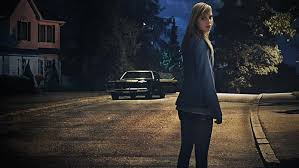
Below presents the film treatment for Sophie & I's Main Task Media Production called 'Masked'. We have spent weeks planning towards this as we want the day of our filming to be organised and recorded in good time.
Masked Treatment

Working Title:
Sophie and I decided to name the Main Task film 'Masked'. We chose this as the title name because within the opening the 'Stalker' that is shown taking pictures of Ava and looking at photos of other women he has harassed, is masked meaning his face is not shown and hidden from the audience for most of the film.
Genre:
Sophie and I researched much into other movie genres and what key features are used to interest the audience, and we found that horror movies were not significantly successful which was clearly shown in our BFI Statistical Yearbook research, although we feel that we can
achieve suspense, thrill and fear within the audience by using camera techniques/shots as well as experimenting with sounds, lighting and transitions during post-production.
Further Horror Genre Research:
 "Horror
film is a film genre that seeks to elicit a negative emotional
reaction from viewers by playing on their fears. Inspired by literature from
authors like Edgar Allan Poe, Bram Stoker, and Mary Shelley,
horror films have existed for more than a century. The macabre and
the supernatural are frequent themes, and may overlap with
the fantasy, supernatural fiction and thriller genres.
"Horror
film is a film genre that seeks to elicit a negative emotional
reaction from viewers by playing on their fears. Inspired by literature from
authors like Edgar Allan Poe, Bram Stoker, and Mary Shelley,
horror films have existed for more than a century. The macabre and
the supernatural are frequent themes, and may overlap with
the fantasy, supernatural fiction and thriller genres.
Horror
films often deal with viewers' nightmares, fears, revulsions and terror of
the unknown. Plots within the horror genre often involve the intrusion of
an evil force, event,
or personage into the everyday world. Prevalent elements include ghosts, extra-terrestrials, vampires, werewolves, demons, gore, torture, vicious
animals, evil witches, monsters, zombies, cannibals, psychopaths,
and serial killers."
In Wikipedia Retrieved 4th January
Central Theme:
 Our central
theme is technological ignorance as our film is a modern, 2017 production and therefore, will be relevant to our target audience (Young adults/Adults).
Our central
theme is technological ignorance as our film is a modern, 2017 production and therefore, will be relevant to our target audience (Young adults/Adults).
We
also chose to centre our film on stalkers and the overall awareness of dangers that people in the present day face, due to unknown people that possibly have a past with you.
Synopsis:
Masked
is a story about a stalker who has been following, gathering and predicting Avas' every move since she was 16. Ava is around 20 years old, is happily working under business and yet does not know the dark side to her life that is soon to be revealed. The stalker continues to watch over other women and silently harm them without leaving a trace. Ava is the final piece of his puzzle.
Pitch:
Once Sophie and I had finished deconstructed 3 different horror movie openings we were then inspired to make and produce an original film opening. We gathered and collected our inspiration and ideas from the movie “SCREAM”, this is because throughout the opening, the primary character is being hunted down by this
voice on the phone.

Through this we decided to make our plot about someone being followed or hunted for, but rather than through a telephone call we discussed that we wanted to make our plot about the stalkers perspective, and how those types of people plan their everyday actions.

Through this we decided to make our plot about someone being followed or hunted for, but rather than through a telephone call we discussed that we wanted to make our plot about the stalkers perspective, and how those types of people plan their everyday actions.
Our
target audience is 15+ year olds so we can have more adult themes, i.e.
we want to use themes such as the danger of strangers and how it can be a huge harm to your life.
Character:


Fran
Aghoghovbia as Ava, the target.
We only see the Stalkers hands however, is wearing gloves so therefore will be played by either Sophie or I.
Film Opening Sequence/ Screenplay:
SCENE 1: (20/120 seconds)
“2:30PM
Tuesday afternoon”
(From
STALKER perspective (medium shot of AVA sat down writing on her notepad,
drinking her coffee and having a conversation on her phone))
AVA
on mobile phone: Yeah I finish 5:30PM, let’s meet up for drinks around 6PM?
…
Okay
cool, see you then!
Okay,
okay, yep, bye!
SCENE 2: (20/120seconds)
Credits
roll
Close-ups
(medium
close -up of actors’ head and the wall behind her)
Puts
phone down onto table: first credit rolls past her head “starring Francesca”
(medium
close-up of actors’ hands and then focus on the mostly empty notepad)
AVA
writes on notepad “6PM drinks”, lift hands away: credit “Producers Nav and
Sophie”
(overhead
shot of actors’ drink and focus on the empty table once actor pulls it away)
AVA
picks up her coffee and leaves a bare table which reveals a credit
“Distributors N&S FILMS”
SCENE 3:(60/120 seconds)
(Medium
shot which doubles as a POV shot from the STALKER looking towards AVA, as if he
is staring)
(In
same shot but close-up focus of phone that STALKER holds in front of camera,
with the camera app open)
STALKER
takes photo of AVA
(Camera
then focuses back onto AVA)
AVA
looks at watch then packs up and starts to leave the café.
(POV,
downwards tilt to a table of photos of her on different occasions, inside a
file. then he closes her file then putting on top of his pile pf identical folders
with different names on each, including AVAS)
STALKER
takes a final look at his file, and closes it on top of the others
(when
he closes the file, there is a fade out to black OR a cut to black)
SCENE 4: (60/120 seconds)
(Tracking
shot of AVA walking onto the train.)
“{8:30AM
Tuesday morning)”
(Handheld
shot, pan to the window of the train)
(Clip
of train moving then when it goes into a tunnel, title appears “MASKED” as soon
as the whole screen goes black)
(Title
fades out to a fully black screen)
Film Techniques:
Within our Main Task we will be incorporating many
different film techniques to ensure our production is of high standard and
quality. As the opening is only focussed on one character (Ava), there will be
no dialogue between two characters apart from the conversation Ava has over the
phone therefore, an over-the-shoulder shot is not to be used.
An effective shot and camera technique we will be
incorporating is a ‘Tilt shot’, which will be used to represent a ‘Male Gaze’
shown through the Stalkers Iphone. For this Sophie & I are adding more of a
twist to the traditional male gaze by making it more modern day – which works
well with the themes.
‘Pan shots’ will be a common camera technique used
to track the the characters movements when walking out of the coffee shop to
when she goes on the train.
We will also be including ‘Zoom shots’ to show the
POV of the stalker and how he is completely focussed on everything Ava is
doing, this creates a creepy and unsettling atmosphere for the audience.
Lastly, we want to incorporate a high angle over the
head shot to show Ava looking at her watch and hesitantly packing up her stuff
in her bag. We will do this by having someone hold the camera steadily above
the subjects head, to ensure the camera does not fall out of their hand we will
ties the strap around our wrist to securely attach the camera as well as keep
it in a straight position.
Production Considerations:
In order to film the
production we will need to ask permission from the ‘Costa’ coffee shop in
Bourne End whether we can film in there during the morning through to the afternoon.
We need to make sure that we find an area in the coffee shop that is fairly
quiet and where not many people are sitting around as we don’t want to be
filming any-one but ‘Ava’ and the Stalker. However, we don’t want the shop to
be quiet as a little bit of ambient sound will help create verisimilitude when
it comes to our post production. We will
be recording the footage in Bourne End as it is a close location and will not
be too far from our houses. This is more convenient because if anything
dangerous happens such as damaging any props or equipment, then it will be a
short distance to our house. The main safety concerns that we will have within
the production are discussed in more detail within the Risk Assessment.
Brief Locations Research:

Bourne End will be the area where we record our footage.
- Costa coffee is where Ava and the Stalker will sit.
- Train station is where Ava will get on the train as if she was on her way to work.
The train station is close to the café, it is a safe
area, easy for both Sophie and I as well as our actress Fran to get to.
Bourne End is a small town, therefore is easier to get permission for
filming as we wouldn’t be disturbing as many people.
Casting Research:
We chose Fran as she not only took GCSE drama, but
she is currently talking A Level drama too, and after we watched one of her
performances we were convinced that she was the perfect actress for our roll.
Shot List:
SCENE 1: Establishing Shot
- Long shot to Medium shot from stalkers perspective (while the primary subject is on the phone)
SCENE 2: Credits
- Medium close-up OR close-up of primaries side of face 'Starring: Fran' (while she is still on the phone)
- Close-up of actor's head and the wall behind 'NGS Media Production' (Primary puts the phone down)
- Medium close- up of actor's hand when she puts her phone down, 'NGS FILMS'
- Close-up & slow zoom of her writing in the notepad '6pm drinks' and then credit 'Directors: Sophie & Nav'
- Overhead close-up shot of actor picking up coffee - camera focussing on the residue left from the cup, credit appears 'S&N sounds'.
SCENE 3: Main
- Long shot (stalkers perspective) of actor while she sits there and writes in her notepad.
- Pull up phone, extreme close-up of mobile phone, on camera app, taking a photo of actress.
- Camera focuses back onto the actor through a close - up.
- Overhead shot how her looking at her watch, where her phone is going off indicating she must go back to work.
- Back to a long shot of her packing up her stuff and leaving the shop, pan of her leaving.
SCENE 4: Reveal
- Overhead OR POV shot of stalker sorting out the actresses' photos and files - other pictures of women are also shown on the table.
- Tracking shot of the actor walking by the train (watch the train go by).
- Handheld shot on train, pan to the window of the train.
- Clip of the info and title appears when the train goes through the tunnel (screen goes black).
BLACK SCREEN: END
Storyboard:


This is the storyboard we created to hep us with our main task production
Risk Assessment:
Hot Drinks - The use of hot
drinks can be a risk to the subject if they were to spill/knock/or consume it as this could result in a possibility of the subjects mouth to burn for a while preventing them from performing at their best. To make sure this will not occur, we will be ensuring placement of the drink
on the table is away from any electronic object and to be safe, Ava will not consume the drink until we have added cold water to it so that if it were to be drank or spilled it would not be a physical danger. Sophie & I will also have napkins and cup rings near by to make the drink graspable so that the subject is less likely to drop/knock it. There is also
the risk that the subject may spill the drink on the floor and following from that may slip
and therefore hurt themselves.To prevent
this, we will be covering the area under the table with towels which the behind-the-scenes
crew (Sophie and I) will supply.
Table - If the
subject(s) do knock the table due to the short height of the furniture, then
there is a potential physical health risk as this could cause some form of
bruising, or even more serious risks to the skin and bones,
considering their specific health conditions.
To prevent
this, we will try to position the subject at the tallest furniture we can find,
if this is not a possibility we will position the subjects’ legs outside of the
tables area so their legs are facing away from the table.
Filming Safety - During the
filming of the overhead shots, one of the camera women must stand on top of a
chair to achieve the full effect of this scene.
This raises
many safety risks, such as the potentiality that the subject may fall off it,
or that the camera may fall out of the subjects’ hands. To prevent this we will be adding a form of lanyard to the camera ensure it doesn't slip out of the subjects hands which could seriously harm the subject.
There is also potential risk of either the actor or the behind-the-scenes crew of being approached
by someone from the public as they could be upset if they’re in shot/feel
uncomfortable. Therefore, if the public were to be in the footage we would ask for the permission before and if they are not happy with it, we will locate to a different seating within the shop.
Train safety - Asking permission when filming strangers is a safety risk as the possibility that they decide that they are uncomfortable with being filmed/ or have filming done around them , could cause anger towards the entire filming team, including the actress. To avoid this, we will be aiming to film at a non-peak hour of day and then
further find an empty/the emptiest carriage on the train and have a few more actors
to play background extras.
Another risk
when filming on a train is the danger of the proximity of the subject and the
train itself. To prevent any
potential physical danger, we will be ensuring that the subject will be behind
the yellow line on the platform to allow the train and the subject enough
space.
Location Safety- If our chosen
location (Bourne End) holds dangers to any of the subjects during the filming
day, i.e. public scenes (fights, etc.) Then we will do our best to ensure the
safety of them by going to the location during the safe times of the
day, i.e. midday during daylight. We will also try to securely cover our equipment
by holding them inside an ambiguous bag, and overall being discreet in our
actions by not making a lot of sound/changing the set-up of the set and
location.
Location Research:
BOURNE END
“Bourne End is a village mostly in the parish
of Wooburn and Bourne
End,
but also in the parish of Little Marlow,
in Buckinghamshire,
England. At the 2011 Census the population was listed in the civil parish
of Wooburn.
The village is near the border with Berkshire,
on the north side of the River Thames,
close to where the River Wye
empties into the Thames.”
In Wikipedia Retrieved 4th January
'The
location has 3 churches, and is a predominately Christian village.
It also has 3 schools;
Westfield School, Claytons Primary School, and Bourne End Academy.
Bourne End also has
several restaurants, sporting clubs, and supermarkets. As well as having a
train station with several bus tops.
Bourne End is part of the
Buckinghamshire county, which is in south-east England. Bourne End is an
affluent village, and furthermore a secure and safe village.
Bourne End is somewhat
secluded as there is no town centre, although it is popular in the summer due
to the regattas during July.
Although Bourne end is a
mainly safe area, there have been some dangerous instances: for example, August
the 2nd 2016 a 16-year-old boy riding a moped was approached by 2
men whom were inside a car, around 10:15PM. They threatened the boy with a
knife until he gave his personal possessions.'
In GetBucks Retrieved 4th January
The Costa in Bourne End is located: 67 The Parade, Bourne End SL8 5SB, England, and is a popular
destination within this village with mainly positive reviews:
This link above displays a review via
TripAdvisor stating that this is a family friendly establishment, enhancing the
positive reviews that the coffee shop already holds.
This is just one of many
positive reviews, however there are a few negative reviews, but these are
recounts of the days’ that had poor service. However, regarding what we will be using the coffee shop for, service will not be a problem.
Makeup/Costume Research:
ACTRESS: Francesca's look
Sophie and I have decided that we want
Fran to have a simple, clean and smart look as this will suggest to the
audience that she is a professional and neat woman. The simple makeup will also be helpful to wear, so she
can look older than 16.
This simple look also suggests an
innocent and ignorant trait to her character; this helps with the themes within
our film as the primary character is the victim of reverse dramatic irony.
Other makeup looks, i.e. bold red lipstick
connotes other themes, i.e. romance, which suggests to the audience is that the
primary/secondary character is aware of what is being portrayed. Sophie and I
decided on this natural makeup look as it effectively connotes to the
audience that Fran’s character is oblivious to what is happening.
Bold Makeup looks also connote to the
audience that the character is not set for a business environment. We wanted our
audience to believe that Fran’s character was focused on her life rather than
the surrounding influenced, yet at the same time is involved in the world, this
is shown using our props.
As for clothing Francesca can wear what she wears to school, as she is going to be portrayed as a business woman.
Props Research:
FRAN:
Table- Which table (preferably a light area)
Chair- Proper and rickety chair
Notepad
Phone- Modern day phone (iPhone)
Bag- School one (One shouldered bag)
Removable clothing items- Scarfs, coats, etc.
Coffee- From café.
STALKER:
Table- Which one (preferably dark stingy one)
Chair- Stable one
Files- With labelled names on it
Photos of Fran inside file(open)
Coffee (same as her)
Phone (modern day phone)
Bag – satchel